
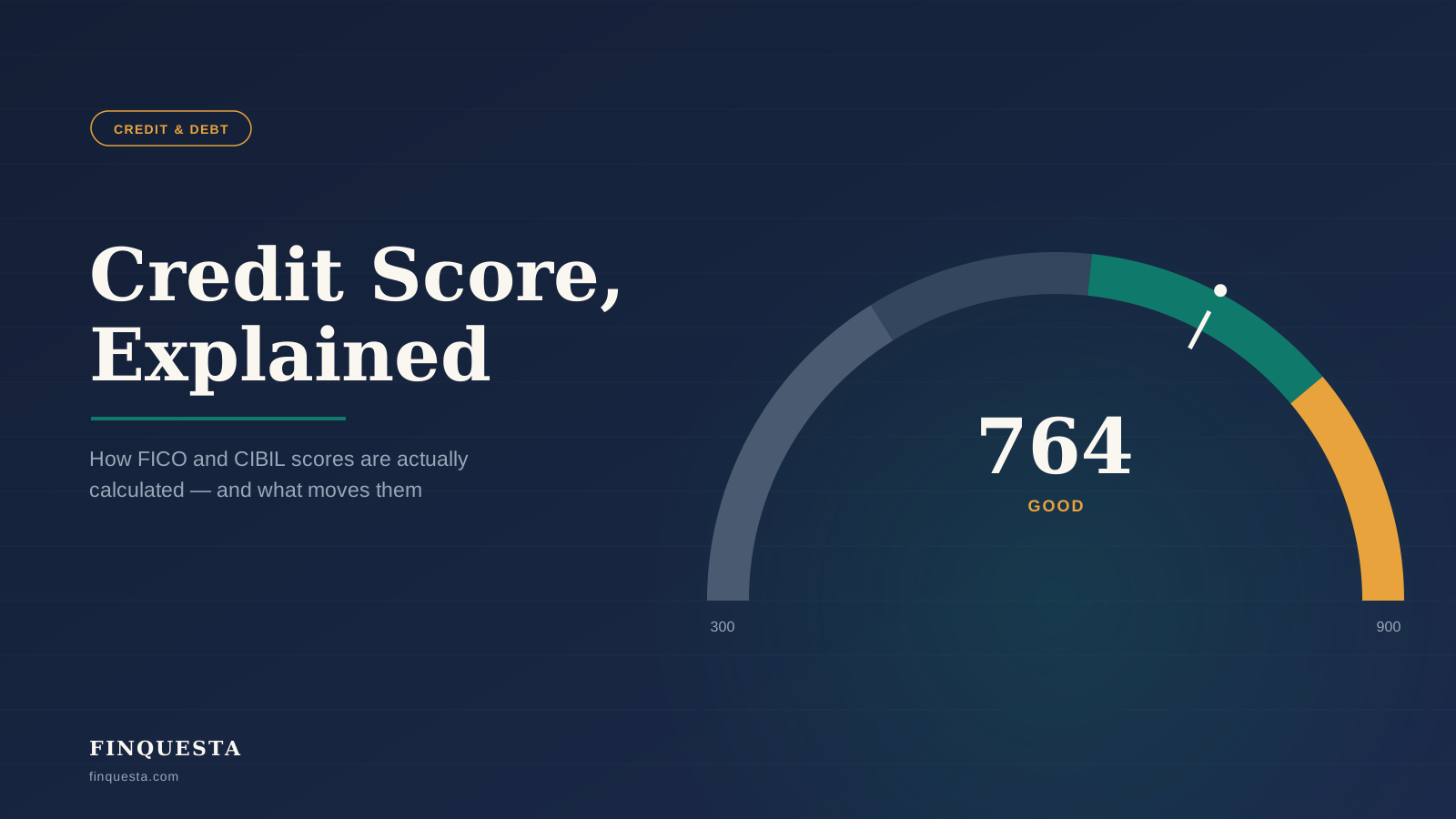
| WHAT IS A CREDIT SCORE? A credit score is a three-digit number, generated from your credit report, that predicts how likely you are to repay borrowed money on time. In the US, FICO Scores run from 300 to 850; in India, the CIBIL Score runs from 300 to 900. Anyone who has used a credit card, loan, or EMI has one — calculated by a credit bureau, not your bank. Lenders use it to decide whether to approve you and what interest rate to offer. There’s no legal minimum to “have” a score, but most lenders set their own approval cutoffs. |
Table of Contents
Two people can earn the same salary, hold the same job title, and still get completely different loan offers on the same day. One gets a 9% interest rate; the other gets 14%, or gets turned down outright. The difference usually isn’t their income — it’s a three-digit number neither of them fully understands. That number is built from a handful of specific, mechanical inputs, and once you know what they are, the rest of your credit history stops feeling like a black box.
The Five Things a Score Actually Measures
Credit scoring companies don’t reveal their exact formulas — those are proprietary and closely guarded. But the categories of information that go in, and roughly how much weight each carries, are public. In the US, FICO — used by the large majority of top lenders — groups everything in your credit report into five categories.
According to myFICO, the consumer arm of the Fair Isaac Corporation, those categories are payment history (35%), amounts owed (30%), length of credit history (15%), new credit (10%), and credit mix (10%) — weightings drawn from the general population and calculated only from data in your credit report, not your income or job.
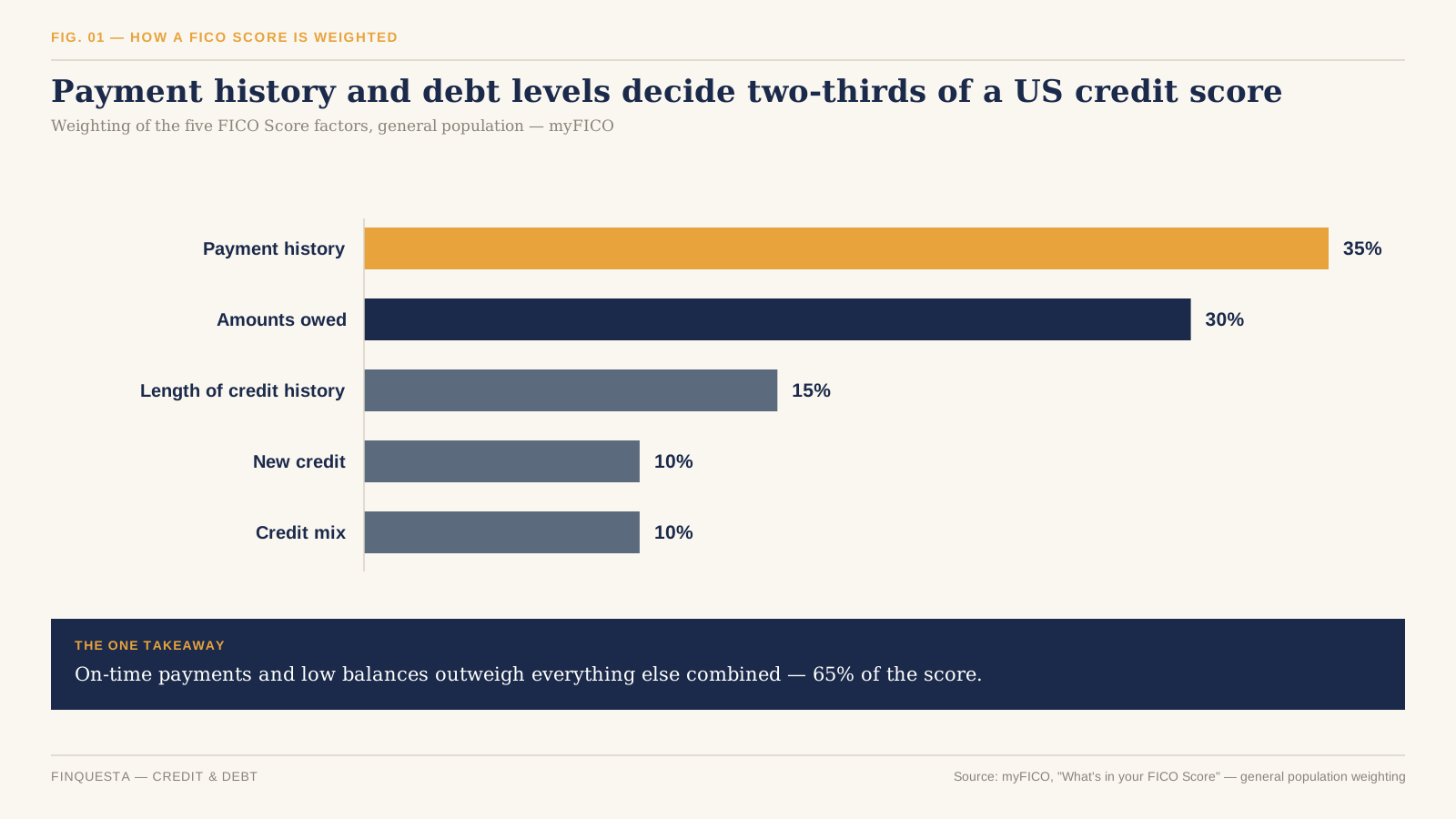
(FIG. 01): Horizontal bar chart of the five FICO Score factors weighted at 35%, 30%, 15%, 10%, and 10%
Payment History: Worth More Than Everything Else Combined
Payment history is the single largest factor in a FICO Score, and myFICO describes it as the strongest available predictor of whether someone will repay future debts as agreed.
This category looks at whether you’ve paid past accounts — credit cards, retail accounts, installment loans, mortgages — on time. It weighs three things about any late payment: how recent it was, how severe it was (30 days late is treated very differently from 90+ days or a collections account), and how often it’s happened.
Experian notes that a single payment made 30 days or more late can cause significant damage, and that the impact compounds the further behind a borrower falls — with a collections account, foreclosure, or bankruptcy causing even deeper and longer-lasting harm.
The reverse is also true, and less widely understood: one or two old late payments don’t cap your score forever. An otherwise strong track record can outweigh a couple of past mistakes, and the negative weight of an old delinquency fades as it ages further into your history.
Amounts Owed — and the Utilization Snapshot Trap
Amounts owed makes up roughly 30% of a FICO Score, and within that category, credit utilization — the share of your available revolving credit you’re actually using — is the single most influential input.
NerdWallet reports that people with the highest scores tend to keep utilization below 30% of their limit, and often well under 10%.
Here’s the part almost no beginner guide explains clearly: your utilization ratio isn’t based on how much you spent, or even how much you currently owe today. It’s based on the balance your card issuer reported to the bureau on your last statement closing date — a single snapshot, once a month.
myFICO confirms this directly: even if you pay your credit card in full every month, your credit report may still show a balance, because the total on your last statement is generally what gets reported.
Call this the Utilization Snapshot Trap — an original Finquesta framework for a mechanism most articles gloss over. Someone who puts a large one-off purchase on a card, then pays it off completely two weeks later, can still get scored on a high balance if that purchase happened to fall right before the statement date. The fix isn’t complicated once you see it: either pay down the balance before the statement closes, or make a mid-cycle payment so the reported figure is lower — not just the amount you eventually pay off.
Length of Credit History: Why Closing Your Oldest Card Can Backfire
Length of credit history accounts for about 15% of a FICO Score and reflects both how long you’ve had credit overall and the average age of your accounts.
This is why a common piece of advice — “cancel the credit card you don’t use” — deserves a caveat. Closing your oldest account can shorten your average credit age and reduce your total available credit, which can push your utilization ratio up even if your spending hasn’t changed. It’s not an automatic disaster, but it’s a trade-off worth knowing about before you make the call, rather than after your score moves.
New Credit and Credit Mix: The Smaller, Easily Misjudged Factors
New credit and credit mix each carry roughly 10% of a FICO Score.
NerdWallet notes that a hard inquiry — the record left when you apply for new credit — can affect your score for up to six months, though most people see the impact fade well before that.
Credit mix rewards having successfully managed a variety of account types — revolving credit like cards, and installment credit like auto loans or mortgages — rather than only ever having one kind. It’s the smallest factor by weight, which is exactly why opening a loan you don’t need purely to “improve your mix” is rarely worth it: the credit-mix upside is small, and a new hard inquiry works against you in the same breath.
How a CIBIL Score Is Calculated in India
India’s most widely used credit bureau, TransUnion CIBIL, runs on the same underlying logic as FICO but with a different range and, per third-party sources, somewhat different weightings.
TransUnion CIBIL’s own site states that a CIBIL Score is calculated mainly from payment history, credit utilization, age of credit, and enquiries, and ranges from 300 to 900.
Fibe.in, a lending platform, cites approximate weightings of 35% for payment history, 30% for credit utilization ratio, 25% combined for credit age and credit mix, and 10% for new enquiries — though TransUnion CIBIL does not publish these exact percentages itself.
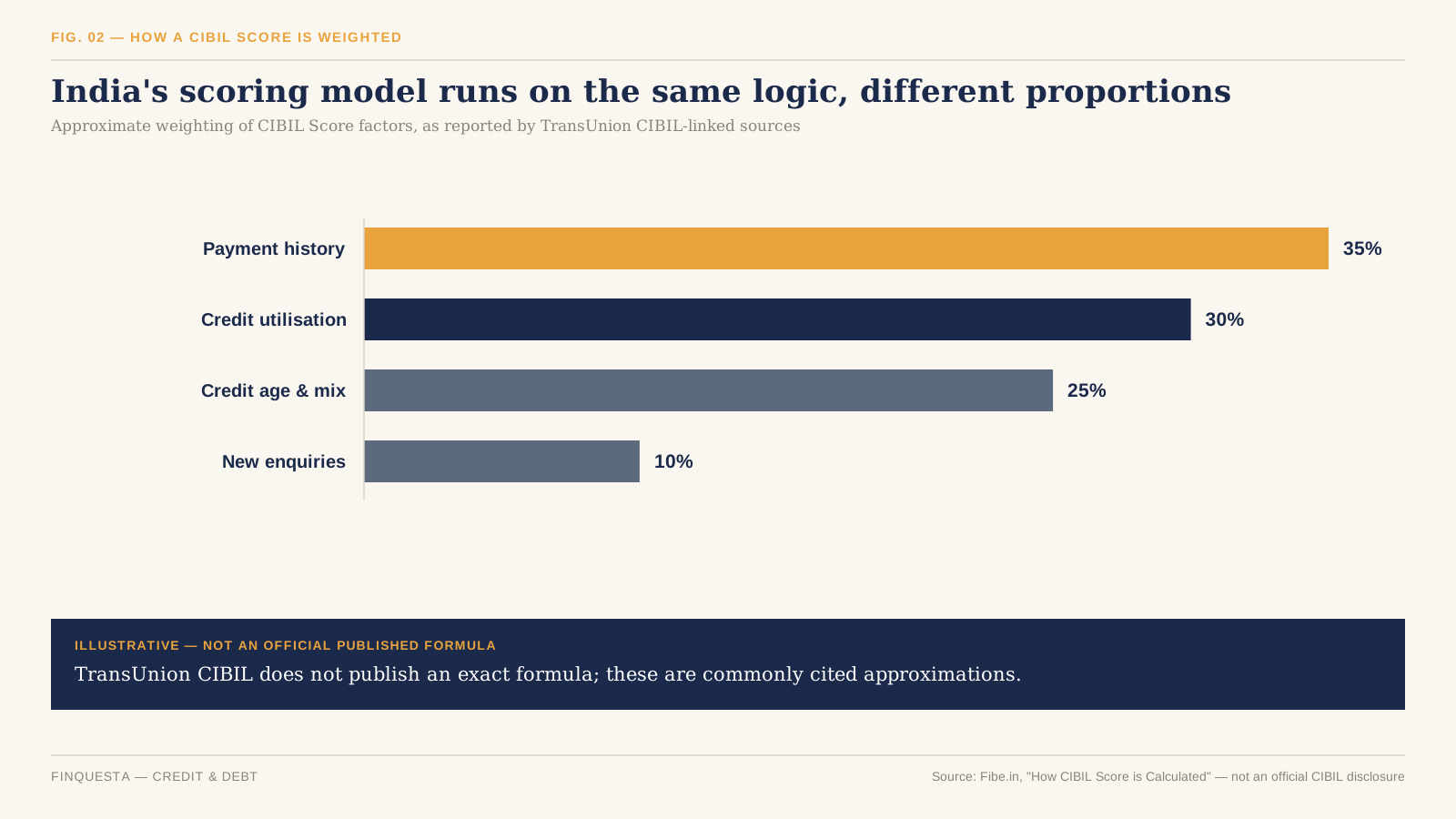
(FIG. 02): Horizontal bar chart of approximate CIBIL Score weighting: payment history 35%, credit utilisation 30%, credit age and mix 25%, new enquiries 10%
A useful India-specific detail beginner guides tend to skip: TransUnion CIBIL introduced an updated model, CIBIL Score 2.0, that changed what counts as a strong score for borrowers with a short credit history.
Under this newer model, borrowers with more than six months of credit history are still scored from 300 to 900, but the “ideal” range shifted to roughly 662–697, compared with 751–800 under the earlier model — and applicants with under six months of history are instead placed on a separate 1-to-5 risk index.
FICO vs. CIBIL vs. VantageScore: Comparing the Scales
If you’ve ever moved between countries, or compared notes with a friend who scores well abroad, the numbers alone can be misleading. A 750 on CIBIL and a 750 on FICO are not measuring the same 750.
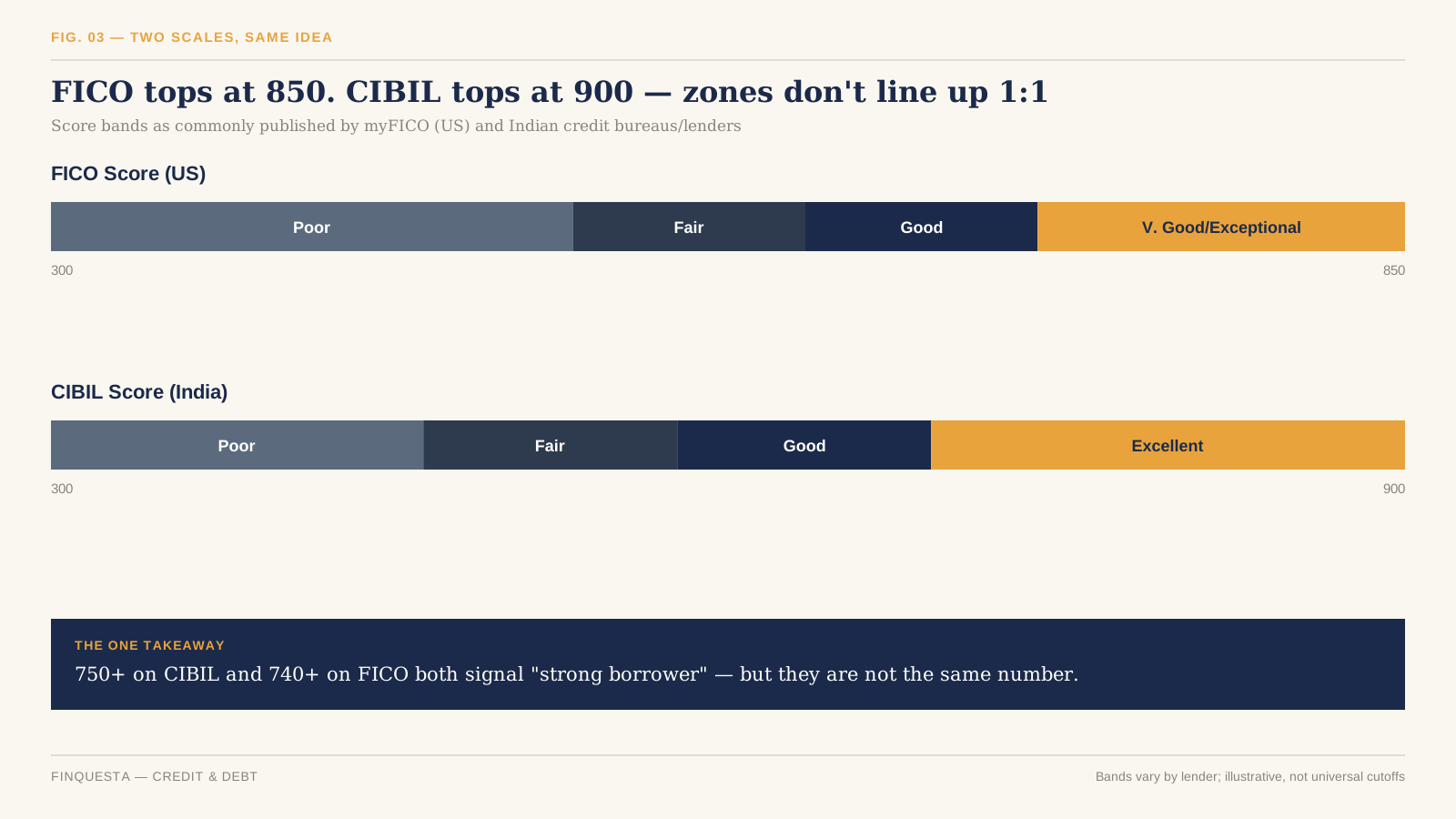
(FIG. 03): Range comparison of FICO score bands from 300 to 850 against CIBIL score bands from 300 to 900
myFICO’s own consumer guidance treats 670 to 739 as a “good” FICO Score, with 740 and above generally considered very good to exceptional.
For CIBIL, a widely cited industry rule of thumb treats scores above 750 as the range most likely to unlock the best interest rates and fastest approvals, based on lender guidance reported by Finnable, an RBI-licensed NBFC.
There’s also a third model worth knowing: VantageScore, jointly developed by the three major US bureaus as a FICO alternative.
NerdWallet reports that FICO and VantageScore use the same broad set of factors but weight them differently — payment history is 35% of a FICO Score but about 40% of a VantageScore — which is one reason your FICO and VantageScore numbers can differ even when pulled from the exact same credit report.
None of this means the scores disagree about who you are as a borrower — they’re built from similar raw material and tend to move in the same direction. The gap matters mainly when you’re comparing a number against a threshold: “is 700 good?” only makes sense once you know which scale you’re standing on.
The Score Refresh Lag: Why Your Score Doesn’t Update Instantly
Pay off a credit card balance today, and it’s tempting to check your score tomorrow expecting a jump. It usually isn’t there yet — and this is the second original framework worth naming here: the Score Refresh Lag.
A score doesn’t recalculate the moment your bank account changes. It moves through a short chain: you act, your lender reports that action to the bureau (typically once per statement cycle, not in real time), the bureau updates your file, and only then — the next time your score is actually requested — does a new number get generated.
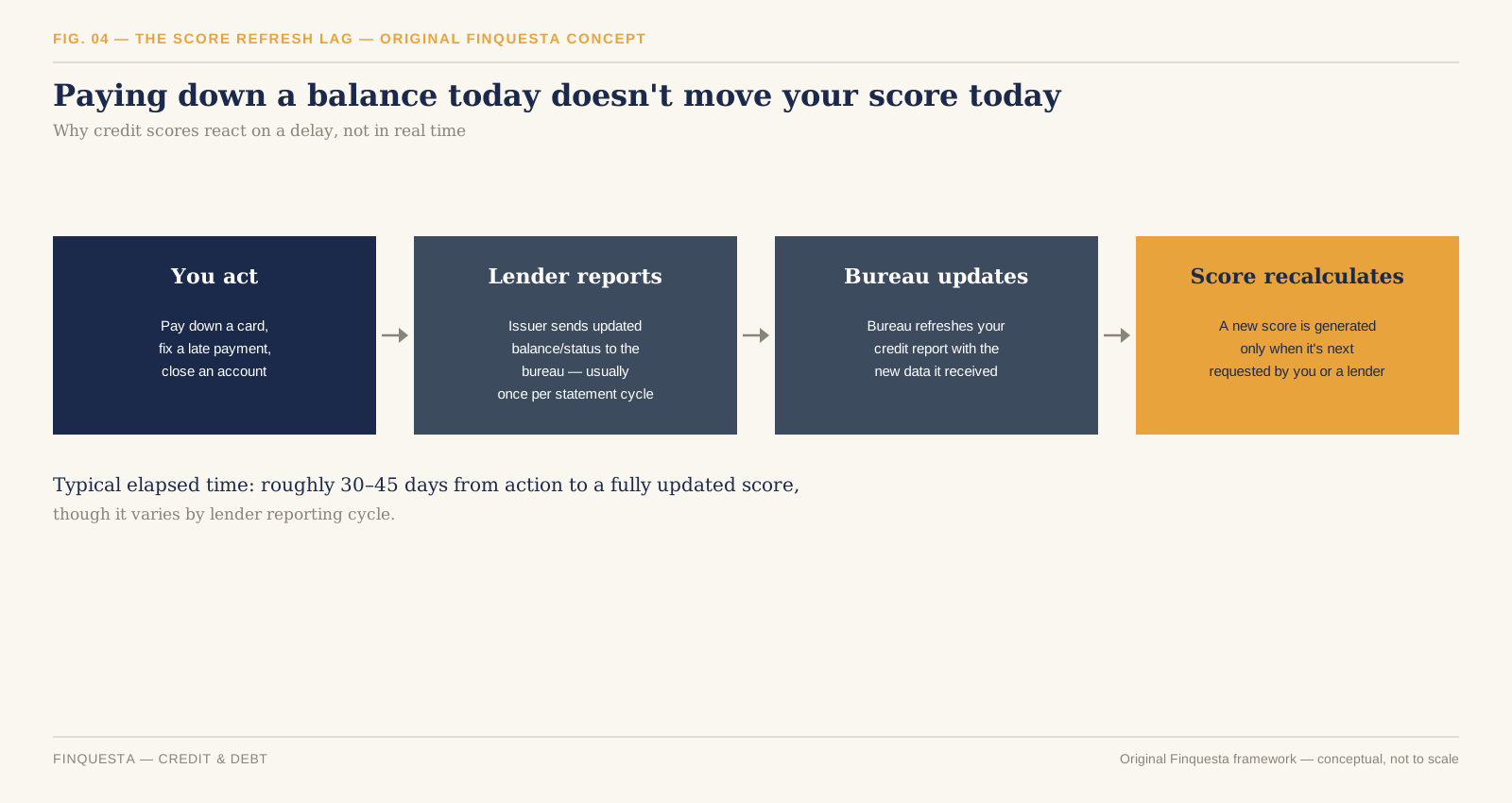
(FIG. 04): Four-step flow diagram showing the Score Refresh Lag: you act, lender reports, bureau updates, score recalculates
The practical takeaway isn’t that paying down debt doesn’t work — it’s that the timing of a score check matters. If you’re managing your score ahead of a specific application (a mortgage, a car loan), the Score Refresh Lag means the moves that matter most need to happen well before you actually apply, not the week of.
Why You Don’t Have Just One Credit Score
The debt-focused financial education site debt.org notes that scores can vary by as much as 40 points between bureaus, because lenders don’t always report to every bureau, and each bureau’s model weighs the same information slightly differently.
In India, TransUnion CIBIL is one of four licensed credit bureaus — alongside Experian, Equifax, and CRIF High Mark — and a borrower can hold meaningfully different scores across them at the same time, reflecting different algorithms and reporting timelines rather than an error in any one report.
This is also why the score a free app shows you and the score your mortgage lender pulls can genuinely differ. Neither is necessarily “wrong” — they’re different models, sometimes built from different bureau data, occasionally pulled on different days within the same reporting cycle.
What Actually Moves the Needle
Given the weightings above, a handful of habits do most of the work, in roughly this order of impact:
- Pay every account on time, every cycle — this is the single largest lever on both FICO and CIBIL models.
- Keep credit utilization low relative to your limit, and remember the Utilization Snapshot Trap: what matters is the balance on your statement date, not what you eventually pay off.
- Avoid closing your oldest active account purely for convenience, since it can shorten your average credit age.
- Space out new credit applications rather than applying for several cards or loans in a short window.
- Check your own credit report periodically for errors — a wrong balance or an account that isn’t yours can drag a score down for reasons that have nothing to do with your actual behavior.
None of this is a guarantee of a specific score outcome, and no legitimate service can promise one — anyone claiming to erase accurate negative history overnight is not describing how these systems work.
Common Myths About Credit Scores
“Checking my own score hurts it.”
Checking your own score is a soft inquiry and, per FICO’s own scoring guidance and consumer education sources like MyCreditUnion.gov, does not affect your score at all — only hard inquiries from an actual credit application do that, and even then the effect is typically small.
“Carrying a small balance builds credit faster than paying in full.”
This isn’t supported by how utilization is scored. Paying your statement balance in full each month, and letting the low resulting figure get reported, works at least as well as carrying a balance — and it also means you’re not paying interest.
“A good income guarantees a good score.”
Income isn’t part of the score calculation at all in either the FICO or CIBIL models described above — the score is generated purely from data in your credit report. A high earner with erratic payment history can score lower than a modest earner with a spotless one.
Frequently Asked Questions
What is a good credit score?
On the FICO scale, myFICO generally treats 670–739 as good and 740+ as very good to exceptional; on the CIBIL scale, 750 and above is commonly treated by Indian lenders as the range that unlocks the best rates.
How is credit score calculated, in simple terms?
It’s calculated by a credit bureau’s proprietary formula applied to your credit report — mainly your payment history and how much of your available credit you’re using, with smaller contributions from how long you’ve had credit, how much new credit you’ve recently sought, and the variety of credit types you hold.
Is checking my credit score safe?
Yes — checking your own score is a soft inquiry and doesn’t affect your score, whether you check it through a bank app, a free credit-monitoring service, or directly through the bureau.
Can I lose points just for applying for a new credit card?
Yes, modestly — a hard inquiry from a new application can affect your score, with NerdWallet noting the impact can linger for up to six months, though it’s typically a small dip that fades faster than that for most applicants.
What is the difference between a FICO Score and a CIBIL Score?
They’re built on similar underlying logic but different scales and, per available sourcing, somewhat different factor weightings: FICO runs 300–850 and is used primarily in the US; CIBIL runs 300–900 and is the most widely referenced score among Indian lenders.
FICO vs. VantageScore — which one will my lender use?
It depends entirely on the lender — some pull FICO, some pull VantageScore, and larger lenders sometimes pull both. There’s no way to know for certain which one a specific lender will check without asking them directly.
How many credit accounts should I have?
There’s no fixed number that works for everyone. What matters more than the count is whether every account you do have is paid on time and kept at a reasonable utilization level — a thin file managed well can outperform a thick file managed poorly.
Does my salary affect my credit score?
No — income is not a scoring input in either the FICO or CIBIL models described in this article. Lenders may separately ask about your income when deciding whether to approve a loan, but that’s an underwriting decision layered on top of the score, not part of how the score itself is calculated.