
| A demat account holds your shares, mutual funds, bonds, and other securities in electronic form, replacing the paper share certificates investors used before 1996. Anyone who wants to buy or sell listed securities in India needs one — it’s a SEBI requirement, not optional. You can open an account with a bank, a full-service broker, or a discount broker, typically for free or a small one-time fee, with no minimum balance. The account itself sits with one of India’s two depositories, NSDL or CDSL, both regulated by SEBI, independent of whichever broker you choose. |
Table of Contents
Priya wants to buy five shares of a company she’s followed for three years. She has the money sitting in her savings account, a UPI app she uses every day, and no idea why her broker’s app keeps insisting she “complete demat account opening” before she can place a single order. She isn’t alone. This is usually the first real friction point for a new investor in India — not because it’s technically difficult, but because almost nothing explains what’s actually happening behind the jargon.
This guide does that: what a demat account replaces, what changed for account-opening rules in 2026, the actual steps, what it costs, and the parts every other guide skips — like the fact that “account opened” and “ready to invest” are two different finish lines.
What a Demat Account Actually Replaces
Before 1996, owning shares meant owning paper. A physical certificate, signed and sealed, that you stored somewhere safe and physically handed over — or posted — every time you sold. Transfers took weeks. Certificates were lost, damaged, forged, or simply misplaced in a drawer for a decade. The Depositories Act of 1996 created NSDL to hold securities electronically instead; CDSL followed in 1999. Ownership records moved from paper you could burn to entries in a regulated electronic ledger.
A demat account is your slice of that ledger — the electronic record of exactly what you own, maintained independently of whichever broker you use to place your orders. Close your broker relationship, and your holdings don’t disappear with it; they sit with the depository, transferable to a new DP whenever you choose.
What Changed for Demat Accounts in 2026
Two regulatory shifts matter if you’re opening an account this year, and both are recent enough that older guides won’t mention them.
Nomination is now a gate, not an afterthought. SEBI’s revised framework, effective September 1, 2026, requires every new single-holder demat account (and mutual fund folio) to either name a nominee or formally opt out — at account opening, not sometime after. The paperwork burden is lighter than the earlier version of this rule: only the nominee’s name and relationship to you are mandatory now, with PAN, Aadhaar, and contact details optional. You can name up to three nominees and split percentages between them, and you can change your mind and update the nomination as many times as you like.
BSDA is now the default, not something you opt into. A Basic Services Demat Account — SEBI’s lower-cost account tier for small investors — already had its holding threshold raised to ₹10 lakh in 2024, up from ₹2 lakh. A newer circular pushes further: if you’re eligible, your account is opened (or converted) as a BSDA automatically, unless you actively choose to keep a regular account. Depositories now reassess eligibility every quarter instead of periodically.
Neither change makes opening an account harder. Both change what “done” looks like — which is the theme running through the rest of this guide.
Who Can Actually Open One
Any resident Indian adult with a PAN card can open a demat account — there’s no minimum income, employment status, or investment amount required.
NRIs can open one too, but it works differently: the account links to an NRE or NRO bank account rather than a regular savings account, and repatriable investments typically route through a separate Portfolio Investment Scheme (PIS) account approved by your bank. NRIs generally can’t trade intraday in cash equities, though delivery-based investing and F&O in permitted categories are usually available.
Minors cannot open or operate a demat account themselves. A parent or legal guardian opens it on the minor’s behalf and operates it until the minor turns 18; derivatives trading isn’t available on a minor’s account.
Joint accounts are allowed, and are worth considering if you’re investing alongside a spouse or family member, though the number of joint holders a DP permits can vary — confirm this with your chosen DP rather than assuming it’s uniform.
Documents You’ll Actually Need
The list is shorter than it looks once you separate what’s mandatory from what’s just one acceptable option among several:
- PAN card — the one genuinely non-negotiable requirement.
- Proof of address and identity — Aadhaar is the fastest route, since it enables e-KYC and lets your DP pull your details straight from DigiLocker. A passport, voter ID, or driving licence works too if you’d rather not use Aadhaar.
- Bank proof — a cancelled cheque or recent bank statement, though many DPs skip this entirely if instant UPI or penny-drop verification succeeds.
- A recent photograph and your signature — usually captured live during the online application rather than uploaded as separate files.
Income proof is not on this list, because it isn’t required to open a basic account — more on when it actually comes up later in this guide.
Choosing Your Depository Participant
Here’s a question worth asking before “NSDL or CDSL?”: does it even matter which one you pick?
It doesn’t — because you don’t get to pick. Your depository is determined entirely by which Depository Participant you sign up with. Choose a DP that’s registered with CDSL, and your account is a CDSL account. There’s no form, no toggle, no decision point where you select a depository directly. Both are SEBI-regulated, both custody securities with the same legal protections, and neither affects your returns, your trading speed, or your account’s safety. Spending time comparing NSDL and CDSL before opening an account is effort spent on a question that was never yours to answer.
Call this the Depository Decoy (an original Finquesta framing): the visible question (“NSDL or CDSL?”) isn’t the real decision — it’s a by-product of a decision you’ve already made one step earlier, when you picked your DP.
The decision that actually shapes your experience is DP type — and it’s the one most first-time investors skip past to get to the paperwork faster.
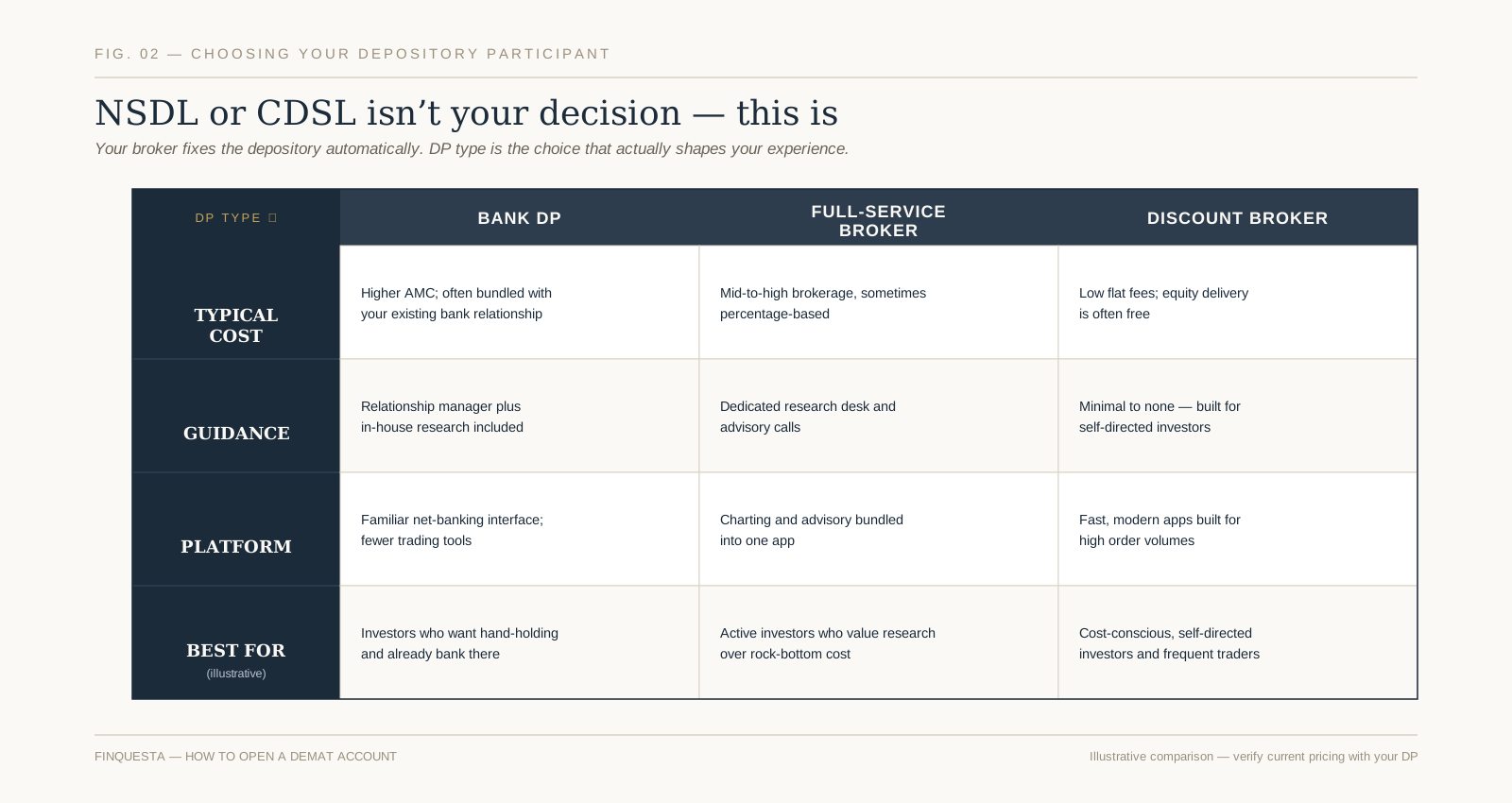
FIG. 02 — Bank, full-service, and discount DPs trade off cost against guidance and platform depth.
A bank-linked DP suits someone who wants a relationship manager, in-house research, and doesn’t mind paying more in exchange. A full-service broker sits in between — research and advisory support, without a bank’s overhead. A discount broker suits investors who know roughly what they want to buy and would rather not pay for services they won’t use. None of these is objectively “best” — the right one depends on whether you value guidance or low cost more, and how often you expect to trade.
The Actual Steps to Open Your Account Online
Once you’ve picked a DP, the process itself is short:
- Fill the application. Name, PAN, mobile number, email, and address, submitted through the DP’s website or app.
- Complete e-KYC. Aadhaar-based e-sign is the fastest route; the DP verifies your PAN against Income Tax Department records and checks your Aadhaar-PAN linkage.
- Complete In-Person Verification (IPV). This can happen over video call — a live photograph and a quick ID check — or in person at a DP office, if you’d rather not do it on camera.
- Link your bank account. Most DPs now do this instantly through UPI or a penny-drop transaction; if that fails, you’ll upload a cancelled cheque or bank statement instead.
- E-sign and submit. A digital signature or Aadhaar-based OTP finalises the application, which then goes to the DP and depository for verification.
There’s also an offline route — paper forms, physical signatures, an in-branch visit — still available if you’d rather not do any of this on a screen, though almost every DP now pushes the online path as the default.
The Account Activation Ladder: Why “Account Opened” Isn’t the Finish Line
Most guides describe demat account opening as a single event: apply, verify, done. In practice, it’s four separate milestones — call it the Account Activation Ladder (an original Finquesta framework) — and skipping the middle two is exactly what leaves new investors stuck later.
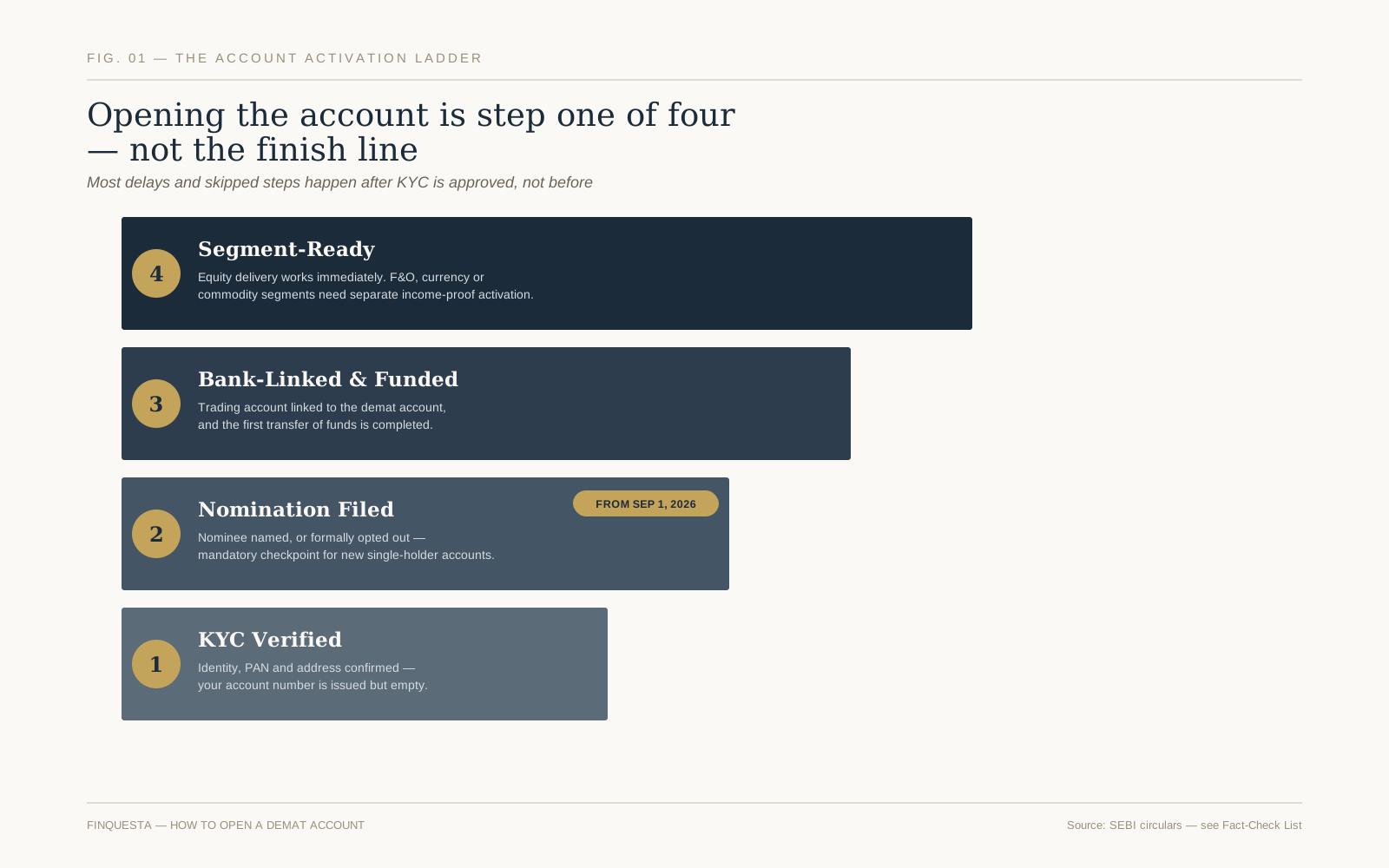
FIG. 01 — KYC clears fast. Nomination, funding, and segment activation are separate milestones — and the ones people skip.
Your account number gets issued the moment KYC clears — but an account with a number and nothing else in it isn’t useful yet. Filing your nomination is no longer something you can leave for later if you’re opening a new single-holder account after September 1, 2026 — it’s built into the opening process itself now. Funding the account and linking your trading account is what actually lets you place an order. And if you want to trade F&O, currency, or commodity derivatives, that’s a distinct activation step requiring income proof — it doesn’t happen automatically just because your demat account exists.
Thinking of account opening as a ladder rather than a single step is the difference between being confused three weeks later about why you “have an account” but can’t seem to buy anything, and knowing exactly which rung you’re still standing on.
How Long Does It Actually Take
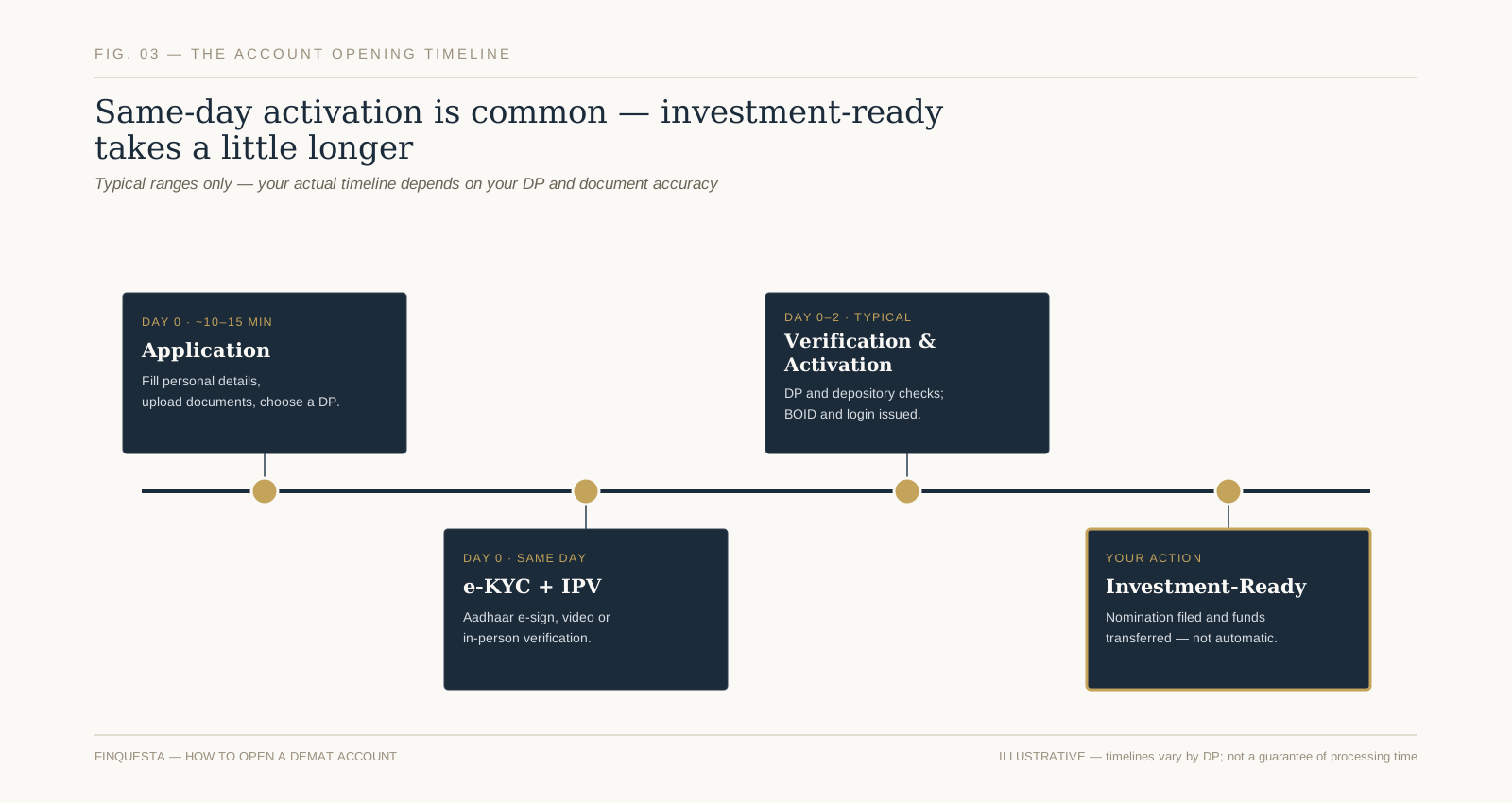
FIG. 03 — Application to activation can take hours; investment-ready depends on you, not your DP.
Same-day activation is genuinely common if your documents match cleanly — Aadhaar e-KYC, a successful penny-drop, and a clean video IPV can take an account from application to active within a few hours. Verification sometimes stretches to a day or two if the DP or depository flags anything for manual review.
What isn’t on that timeline, because it depends entirely on you: filing your nomination and transferring your first funds. A DP can activate your account in an afternoon; only you can make it investment-ready.
Understanding Your Account Number
The moment your account activates, you’ll see a jumble of identifiers that mean nothing until someone explains them once.
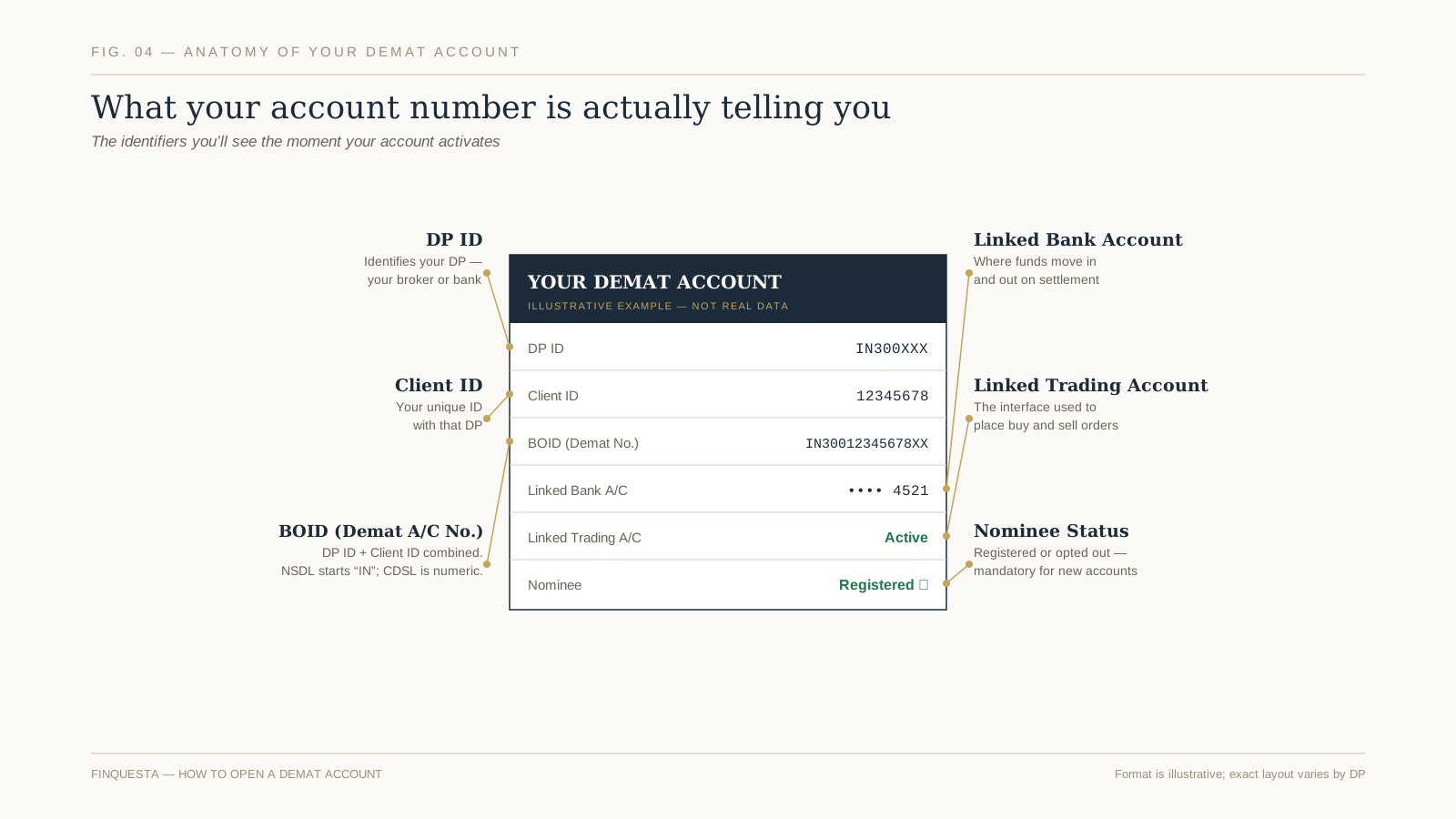
FIG. 04 — DP ID + Client ID = your BOID. The prefix format quietly tells you which depository you’re with.
Your DP ID identifies your Depository Participant — your bank or broker. Your Client ID is your unique identifier within that DP. Together, they form your BOID (Beneficiary Owner ID), the actual 16-digit demat account number. The format itself tells you your depository: an NSDL account number starts with “IN” followed by numbers; a CDSL account number is purely numeric. Neither format is better — it’s simply which depository your DP happens to use.
Your linked bank account handles the money side of every trade; your linked trading account is the interface for placing orders; and your nominee status — registered or formally opted out — is now a checkbox SEBI expects to see completed, not left blank.
Nomination: The Step Most New Investors Skip
Nomination lets someone you name claim your holdings if something happens to you, without your family navigating a lengthy legal succession process. It’s always been a good idea. As of September 1, 2026, for new single-holder demat accounts and mutual fund folios, it’s no longer optional in the way it used to be — you either name a nominee or formally record that you’re opting out, and the digitised process (e-sign, Aadhaar-based consent, or OTP) makes doing so faster than the older paperwork-heavy version of this rule ever was.
If you’re opening a fresh account, budget five extra minutes for this step. Skipping it isn’t really an option anymore, and treating it as an afterthought is how nominations end up incomplete, inconsistent, or missing entirely — the exact problem this rule exists to fix.
What It Actually Costs
Costs vary meaningfully by DP, so treat the figures below as a general shape rather than a quote:
- Account opening charges — often free, sometimes a small one-time fee.
- Annual Maintenance Charges (AMC) — this is where BSDA matters. If your holdings stay under ₹4 lakh, AMC is typically nil under BSDA rules; between ₹4 lakh and ₹10 lakh, a modest fixed annual charge applies; cross ₹10 lakh, and the account converts to a regular demat account with a broker-set AMC, commonly in a few-hundred-rupee range annually.
- Transaction charges — per debit from your account, typically small and broker-specific.
- F&O segment activation — free to activate, but gated behind income proof (a bank statement, salary slip, ITR acknowledgement, or holding statement above a threshold value) precisely because SEBI wants a suitability check before you can trade derivatives, not because your DP is trying to extract another fee.
Common Reasons New Applications Get Delayed
Almost every delay in a fresh online application traces back to one of three mismatches, not a document you’re missing entirely — call these the Three Mismatches:
Name mismatch. Your name on Aadhaar, PAN, and the application form need to match closely — a missing middle name or reordered initials is enough to flag a manual review.
Address mismatch. If your proof-of-address document shows an old or different address than what you enter, expect a query rather than an automatic pass.
Signature or photo quality. A blurry live-capture photo, a signature that doesn’t match your specimen signature on file elsewhere, or a cropped document image are minor issues that nonetheless stall an otherwise-clean application.
None of these are really about the process being strict for its own sake — they’re the same checks a bank would run before opening any account, just automated and therefore less forgiving of small inconsistencies.
It’s worth separating this from a different, later-stage process: rejecting a Demat Request Form (DRF) when converting old physical share certificates into electronic form. That’s a distinct process with its own rejection reasons — mismatched share counts, forged certificates, ISIN errors — relevant only if you’re dematerialising existing paper shares, not something a fresh account applicant needs to worry about.
A Few Things Worth Knowing Before You Start
You can hold multiple demat accounts. There’s no SEBI-imposed limit, provided each is with a different DP and all are linked to the same PAN. The trade-off is cost: every account carries its own AMC, and only your one sole-holder account can qualify for BSDA’s reduced charges.
An unused account doesn’t just sit there for free. DPs can freeze an account left inactive for an extended period, and reactivating it typically means completing KYC again.
Closing an account is simple in principle. Clear any holdings and dues, then submit a closure request to your DP — though SEBI doesn’t prescribe one uniform closure procedure, so the exact steps vary by DP.
Frequently Asked Questions
What is a demat account in simple terms?
A demat account is the electronic record of the securities you own — shares, bonds, mutual fund units, ETFs — instead of paper certificates. It doesn’t hold cash; a linked trading account and bank account handle money movement. You need one to buy or sell anything listed on the NSE or BSE.
Is it safe to open a demat account online?
Yes, provided you use a SEBI-registered Depository Participant. The online process runs through Aadhaar-based e-KYC, PAN verification against Income Tax records, and video or in-person identity verification — the same checks a branch visit would require. Your holdings sit with NSDL or CDSL, not with the broker itself, so your securities remain separately recorded at the depository regardless of what happens to your broker.
What is the difference between a demat account and a trading account?
A demat account holds your securities; a trading account is the interface you use to place buy and sell orders. They work together — when an order executes, the trading account handles the transaction and the demat account is credited or debited accordingly. Most DPs open both in a single application, often described as a “2-in-1” account.
Bank demat account vs broker demat account — which is better?
Neither is universally better; it depends what you’re optimising for. A bank-linked account suits investors who want relationship-manager guidance and don’t mind paying more for it. A discount broker suits cost-conscious, self-directed investors who don’t need research or hand-holding. A full-service broker sits between the two.
How many demat accounts can I have?
There’s no legal cap — you can hold as many as you want, each with a different DP, all linked to the same PAN. What you can’t do is hold two accounts with the same DP. The practical limit is cost: every account carries its own AMC, and only your single sole-holder account qualifies for BSDA’s reduced charges.
Do I need income proof to open a demat account?
Not for a basic account used for delivery-based equity investing. Income proof becomes mandatory only when activating the F&O, currency, or commodity derivatives segments — a SEBI-mandated suitability check, not a broker preference. Bank statements, salary slips, ITR acknowledgements, or a demat holding statement above a threshold value are commonly accepted.
Can NRIs and minors open a demat account in India?
NRIs can, through an NRE- or NRO-linked account, sometimes via a separate PIS route for repatriable investments, and generally can’t trade intraday in cash equities. Minors can’t operate a demat account themselves — a parent or legal guardian opens and runs it on their behalf, and derivatives trading isn’t available on a minor’s account.
What happens if I don’t nominate a beneficiary by the SEBI deadline?
For single-holder demat accounts opened on or after September 1, 2026, nomination or a formal opt-out is built into account opening itself, not an optional step you can defer. Skipping it is expected to progressively restrict account functionality until it’s completed.
Disclaimer This article is for informational and educational purposes only and does not constitute financial, investment, tax, or legal advice. Figures, rates, and regulations mentioned are subject to change; please verify current details with official sources (RBI, SEBI, the Income Tax Department, IRS, or a licensed financial advisor) before making financial decisions. Finquesta may earn a commission from affiliate links in this article at no extra cost to you.